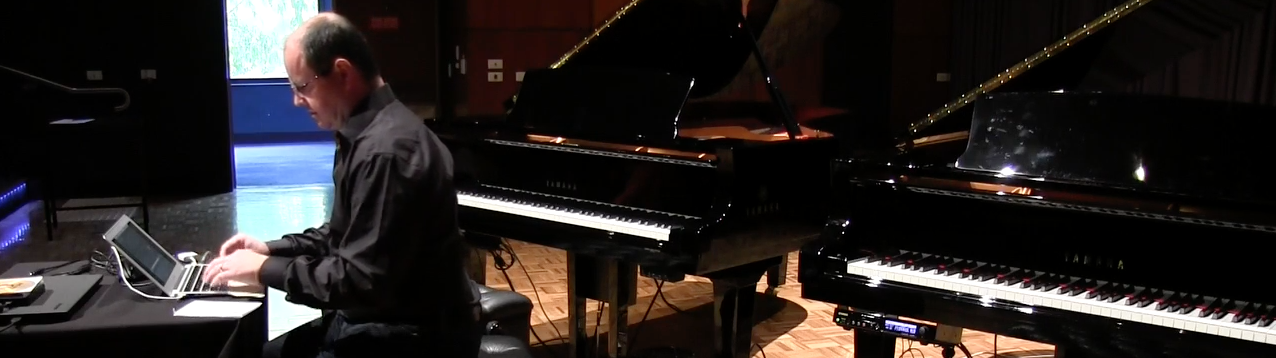
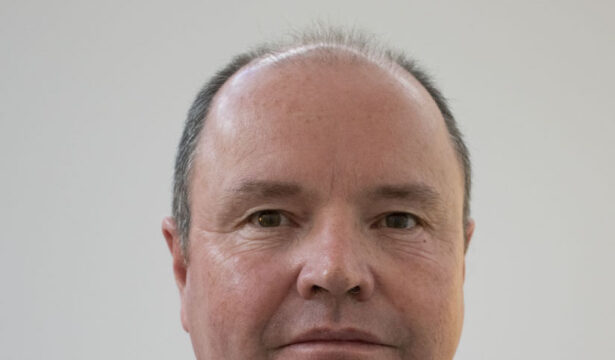
Andrew R. Brown is a computer musician, creative coder, instrument designer, researcher, and educator. He works as Professor of Digital Arts at Griffith University in Brisbane, Australia. His research activities focus on modelling creative intelligence, the aesthetics of computational processes, and the design of generative and interactive audiovisual experiences.
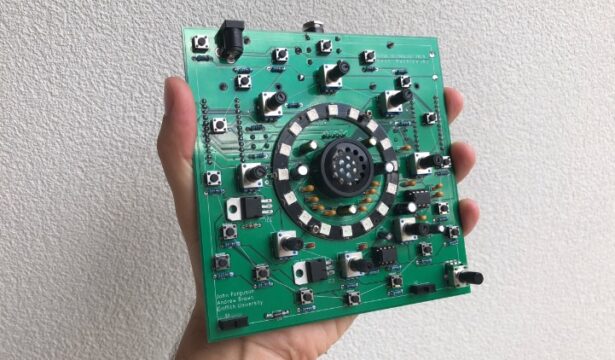
The Beat Machine
Beat Machine family of instruments is a collaborative project of John Ferguson and Andrew Brown. The Beat Machine S3 was developed in 2025. It is a bespoke, handmade musical instrument designed and built from affordable …
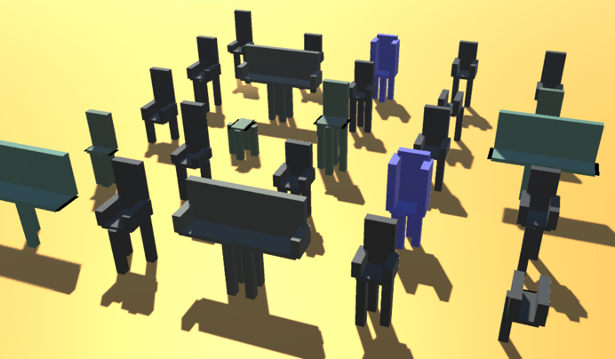
A multi-disciplinary design language and its use with artificial intelligence for innovation
Nelson Vermeer (PhD) This research explores how a workflow be developed to allow for design co-creation, entity mapping, the discovery of analogous question-solution pairs across disciplines based on ideation synthesis through the generation of invention …
Chorus: Songs of Inanimate Objects
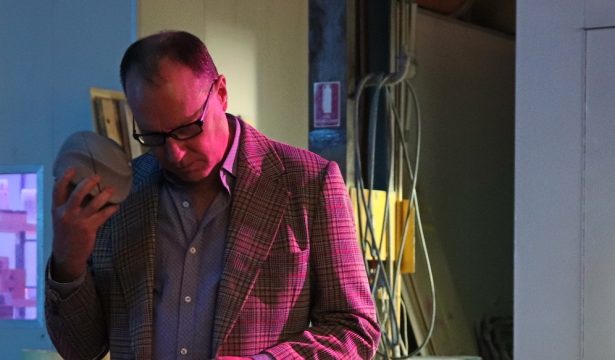
Chorus is a series of three sonic sculptures which have varying haptic qualities and respond with electronically generated sound. Created by Daniel Della-Bosca, Andrew R Brown, and John Ferguson, the objects combine digital design/fabrication (3D …
Music on SoundCloud
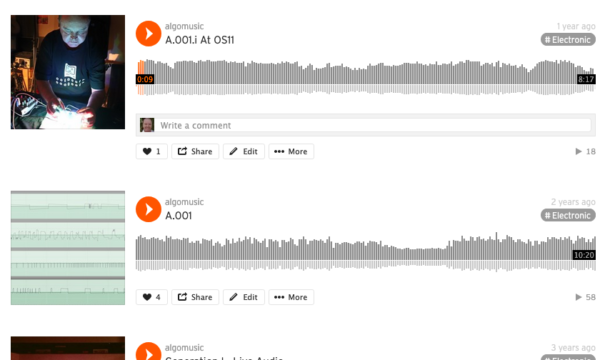
Over the years I’ve posted various musical creations on my SoundCloud account. It provides an overview of my creative journey and features the many approaches I’ve adopted in my co-creative practice with algorithmic systems.
Creating knowledge through collaboration at the interface of art and science
David Harris (PhD) There has not yet been a good descriptive accounting of the nature and form of existing art and science collaborations although some informal sketches have been outlined and such an accounting has …

Visualising disillusionment with politics: An exploration of remixed media and commercial design practices
Rae Cooper (DVA) This research aims to further establish the position of visual communication design as an agent of meta-systemic political engagement. It responds to the question: “How can visual communication design visualise disillusionment with …
GenDynish – Xenakis on the Arduino
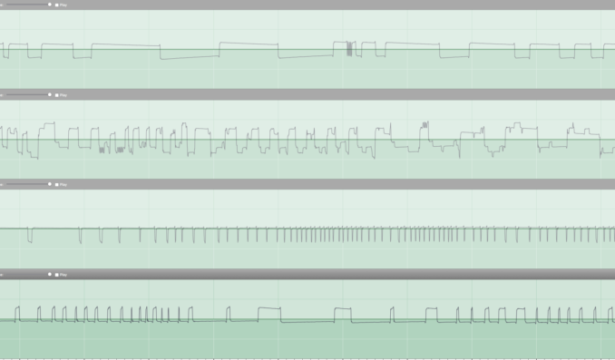
Furthering my previous interests in Stochastic Synthesis I implemented an emulation of Iannis Xenakis’ Dynamic Stochastic Synthesis on an Arduino microcontroller, the resulting algorithm I titled GenDynish. The Gendynish algorithm is software that runs on …
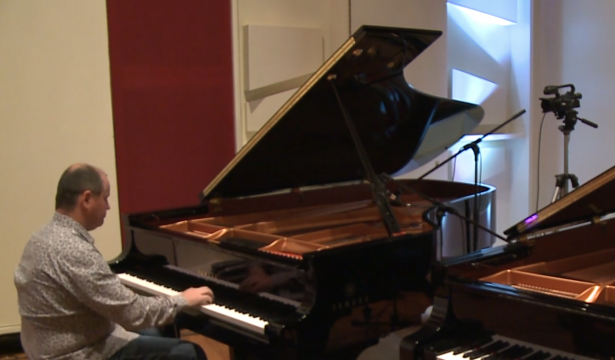
CIM – Controlling Interactive Music
Controlling Interactive Music (CIM) is an interactive music system for human-computer duets. Designed as a creativity support system it explores the metaphor of human-machine symbiosis, where the phenomenological experience of interacting with CIM has both …
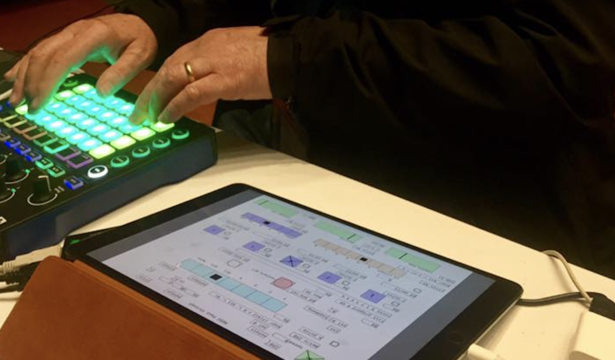
Generations II
Generation II is an interactive electronic music performance between a live improviser and the ‘Evol’ algorithmic music system. The work explores the premise that musical structure can arise from variations and elaboration of musical motifs. …

Sculptural Sonic Agents
Sculptural Sonic Agents is a collaboration between Andrew Brown and John Ferguson. The goal is to explore the development of sonic sculptural agents, these ‘agents’ are bespoke instruments that comprise artificial listening and sound generating capabilities. They …

The Unseen Water: The Transmigration of Scientific Photography into the Domain of Art through Experimentation with the Scanning Electron Microscope
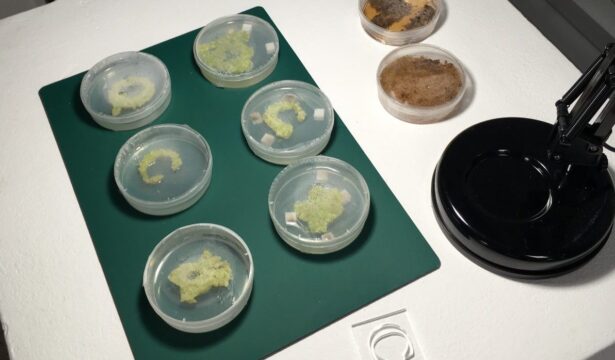
Anastasia Tyurina (PhD) This research involves aesthetic approaches to scientific microphotography. Scientific photography is commonly perceived as a way of recording scientific data through techniques such as photomicrography, high-speed photography, time-lapse photography, x-ray photography, aerial …
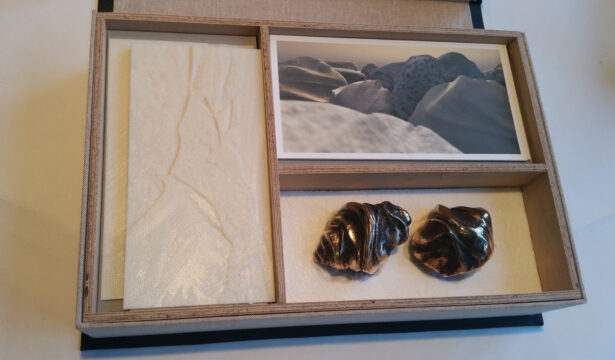
The Aesthetic Implications of Complexity Theory for Object Creation and Haptic Response
Daniel Della-Bosca (PhD) This research explores the ideas of complexity as borrowed from the sciences and in turn adapted to help understand some aspects of the creation and perception of art and design. This exploration …
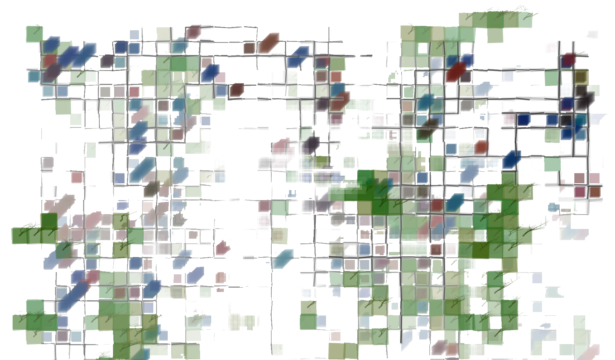
Tile Town
Tile Town is a web-based audio-visual work combining multi-agent generative systems and audio field recordings. It explores computational processes as a design prompt and examples of unfolding intelligence. The project builds a contemplative commentary on …
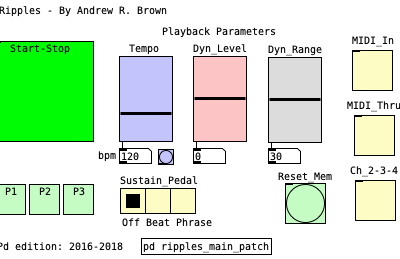
Ripples
A composition for live performer and algorithmic music system. Ripples is a musical duet where the human performance stimulates a cascade of responses from the machine. The work emphasises chordal and arpeggiated material derived, in …
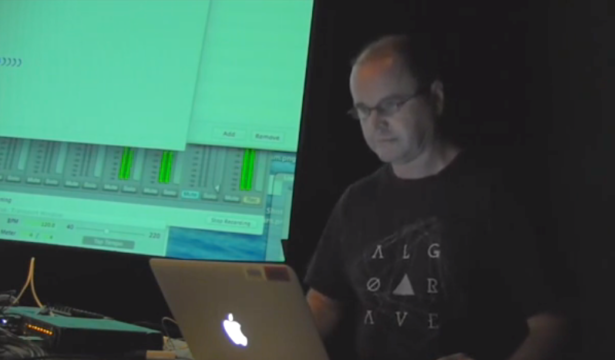
Tactical Temporalities
Tactical Temporalities is a semi-improvised live coding music performance set within the framework of an Algorave, an event that blends algorithmically generated music with an energetic, dance-driven atmosphere. The performance explores my application of generative …
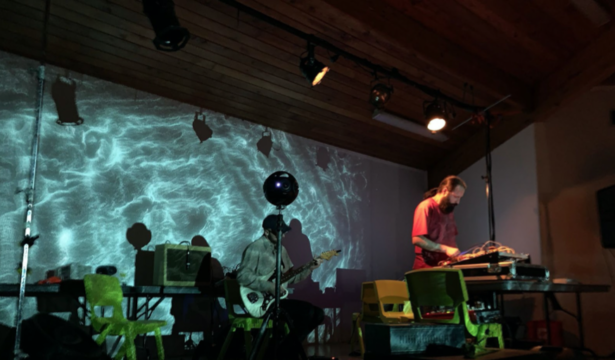
Modular Synthesis and the Unconscious: An Exploration of the Role of Technology and Self-Reflection in Sound Creation and Compositional Process
In this research, David Chechelashvili situates electronic music-making with a modular synthesiser within a broader context of technologically mediated music composition and the various traditions and philosophical underpinnings derived from psychoanalytic writings of Freudian origin …

Amplifying Creativity: Technology in Music education
My book, Music Technology and Education: Amplifying Musicality, published by Routledge, New York, explores the foundational principles of music technology and how these can be effectively integrated into music teaching and learning. It offers a comprehensive overview …

The Many Faces of Creativity in the Digital Arts
Digital arts practices have implications for education effecting the form and modality of work by staff and students and posing challenges for contemporary curriculum in the creative arts. This post will introduce three issues that …
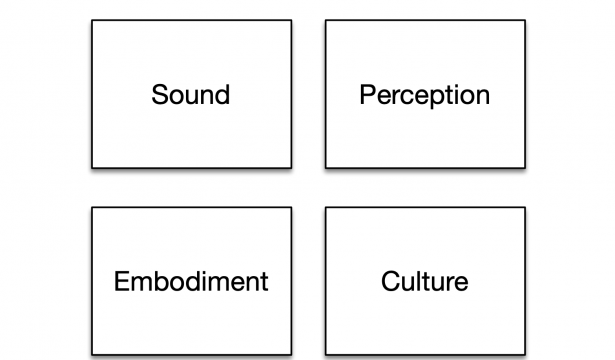
What is Musicianship and how do you teach it?
Andrew R. Brown One of the great things about music is that it is multifaceted. It can be many things to many people, and you can spend a lifetime studying it but still not be …