
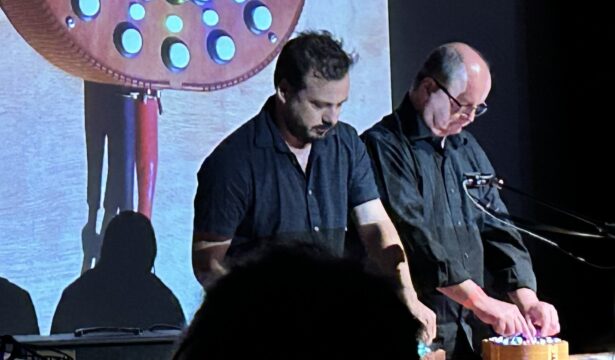
Quadrumvibrate demonstrates an approach to directing algorithmic music systems in real time. At the core of Quadrumvibrate is a performance that unfolds through dynamic interactions between two performers and the generative systems they activate, forming a quartet of human–machine collaborators. The work investigates processes for creating evolving sonic and rhythmic textures derived from algorithmically generated and modulated rhythmic sequences, realised through layered, synthesised percussion.
Rhythm machines have long been central to modern commercial music, yet their role in live experimental electronic performance remains less explored. Quadrumvibrate investigates the boundary between pulse‑based music and noise-based sound practices through a live, interactive performance featuring two musicians using custom digital instruments that employ generative rhythmic patterns and percussion synthesis. The work examines methods of gestural control over these generative elements, emphasising improvisational expressivity and rich spectral detail. Its new instrument, the Beat Machine S3, extends the legacy of unconventional electronic rhythm generators, such as the Buchla 252e and the Ndial, and including the series of Beat Machines developed by myself and John Ferguson, to create dynamic, evolving polyrhythmic textures.
The work was selected through international peer review for performance in London at New Interfaces for Musical Expression (NIME) in June 2026. NIME is the leading international conference for innovation in digital instrument design. While rhythmic automation is common in contemporary electronic music performance, research into improvisation with algorithmic rhythmic systems remains comparatively rare. The research underlying Quadrumvibrate sits between the fields of machine musicianship or computational creativity, which aim to model human performance, and algorithmic music, which codifies rules of music theory. It explores the improvisational possibilities that emerge when performing with generative musical instruments.
The instrument generates a deliberately lo-fi oriented sound pallet and offers a range of rhythm‑generation algorithms, including Euclidean, polymetric, polyrhythmic, geometric, and probabilistic approaches. Rather than presenting fixed material, the performers actively shape the music in real time through direct intervention, triggering, modifying, and regenerating patterns and sounds as the performance unfolds.
Structured as a sequence of contrasting sections, Quadrumvibrate moves between driving, pulse‑oriented passages and more sparse, atmospheric sound worlds. Musical form emerges through the performers’ ongoing interaction with generative systems, as they respond to rhythmic and timbral change. Visual and gestural interaction with the instruments supports clear performer agency, allowing experienced musicians to maintain expressive control while embracing unpredictability. The work foregrounds performative decision‑making, interaction, and responsiveness as central musical elements, demonstrating a refined balance between human intention and algorithmic behaviour in live electronic performance.